Future-Facing Policy for Trondheim City

Design in local democracy
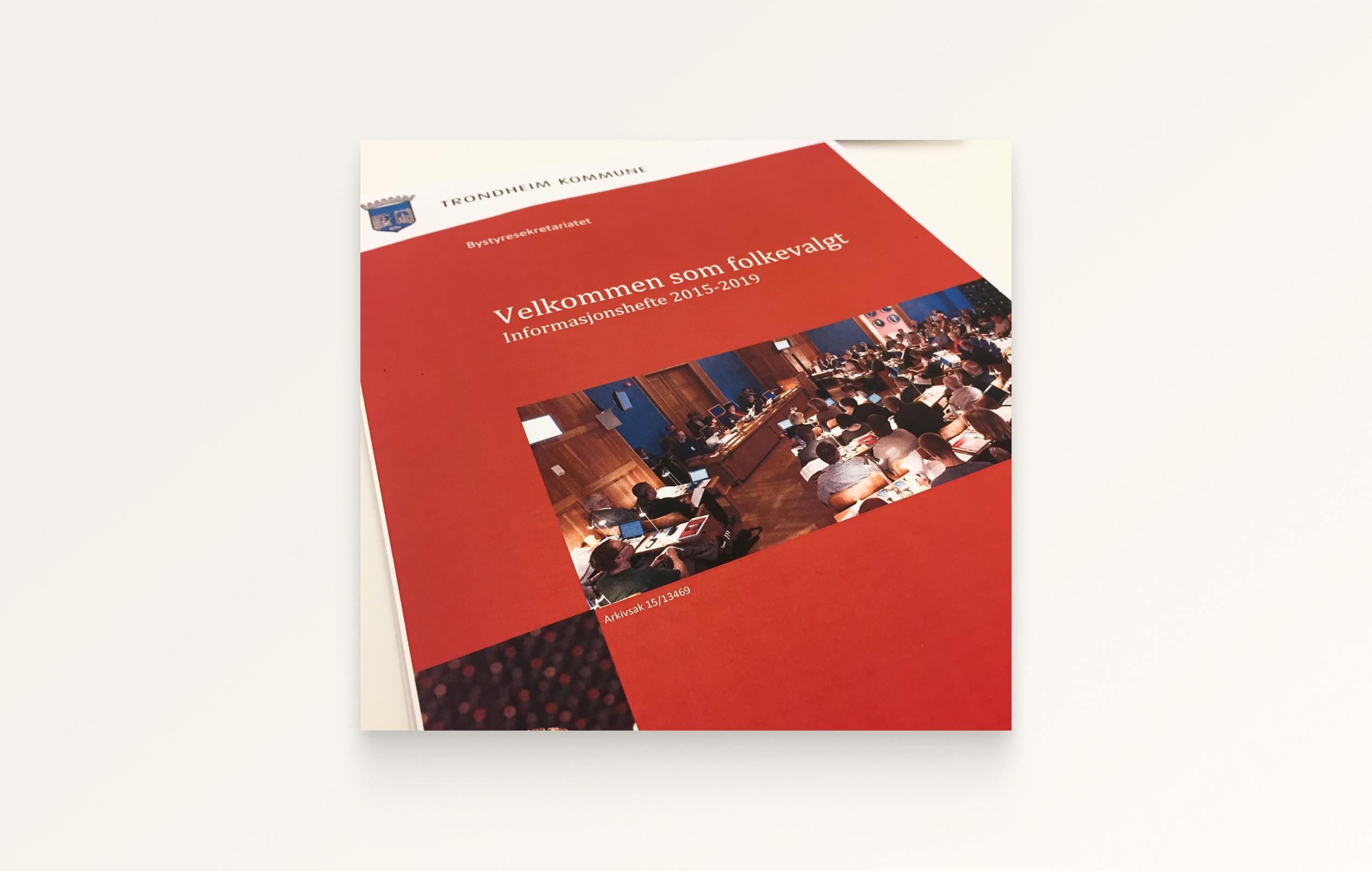
For our master’s thesis, Truls Johansen and I partnered with members of Trondheim’s City CEO strategic advisory staff and explored how design methods could support more thoughtful, long-term decisions in local government.
Flow of public policy

To understand how political decisions are made at the local level, we interviewed politicians across parties, sat in on council meetings, observed internal processes, dug into literature on decision-making theory, approaching it all from a user-centered design perspective.
We conducted a qualitative research phase including:
11 in-depth interviews with politicians and civil servants
6 observations of formal political meetings and decision-making processes
Literature review on decision-making theory and strategic design within the public domain
Artifact analysis of policy documents and municipal planning materials
Detail-first politics and the risk of outdated decisions
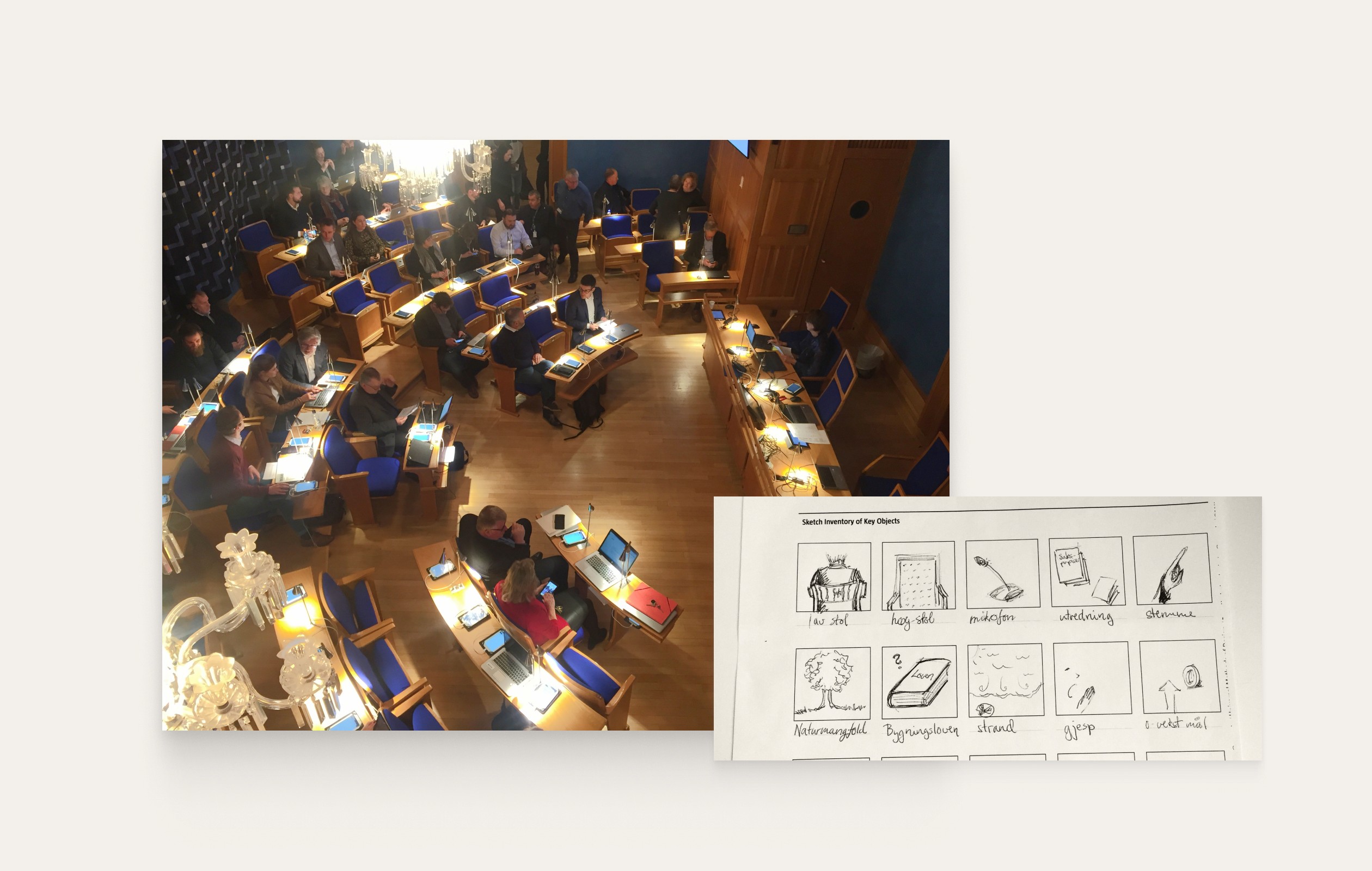
What we found was a group of people trying to do their best under complex circumstances. Some were guided by ideology, others by pragmatism—but most shared a desire to make well-informed choices for their community. Some important insights were:
Citizen needs
“It is very difficult to know what our citizens need.”
“How can we foresee our citizens needs?”
Tacit knowledge from smaller trials and prototyping are easily lost.
The municipality
Committee work can be a political workshop.
Important issues may go under the radar.
Politicians need inspiration to be creative.
Politicians are empathic.
Political work
Municipal operations are complex.
Detail oriented political decisions are a challenge.
The municipality can connect actors, research and funds.
New agreement with NTNU: University municipality.
In Trondheim, most local politicians serve part-time alongside full-time jobs. They care deeply about their communities—but with limited time and fragmented information, they were often guided more by personal experience than shared insight. Politicians held different assumptions about what citizens needed, and while citizen insights existed, they were rarely positioned to influence upstream political thinking. There were also few modern tools or methods for aligning on long-term strategy. Strategic thinking happened mostly inside the administration and wasn’t easily integrated into political discussions. We saw a recurring challenge: political discussions quickly moved into the weeds—specifics, numbers, technicalities—without alignment on the long-term goals, especially across party lines. And by the time a policy was implemented, its context had often shifted.
From insights to framework: shaping a city-level policy model
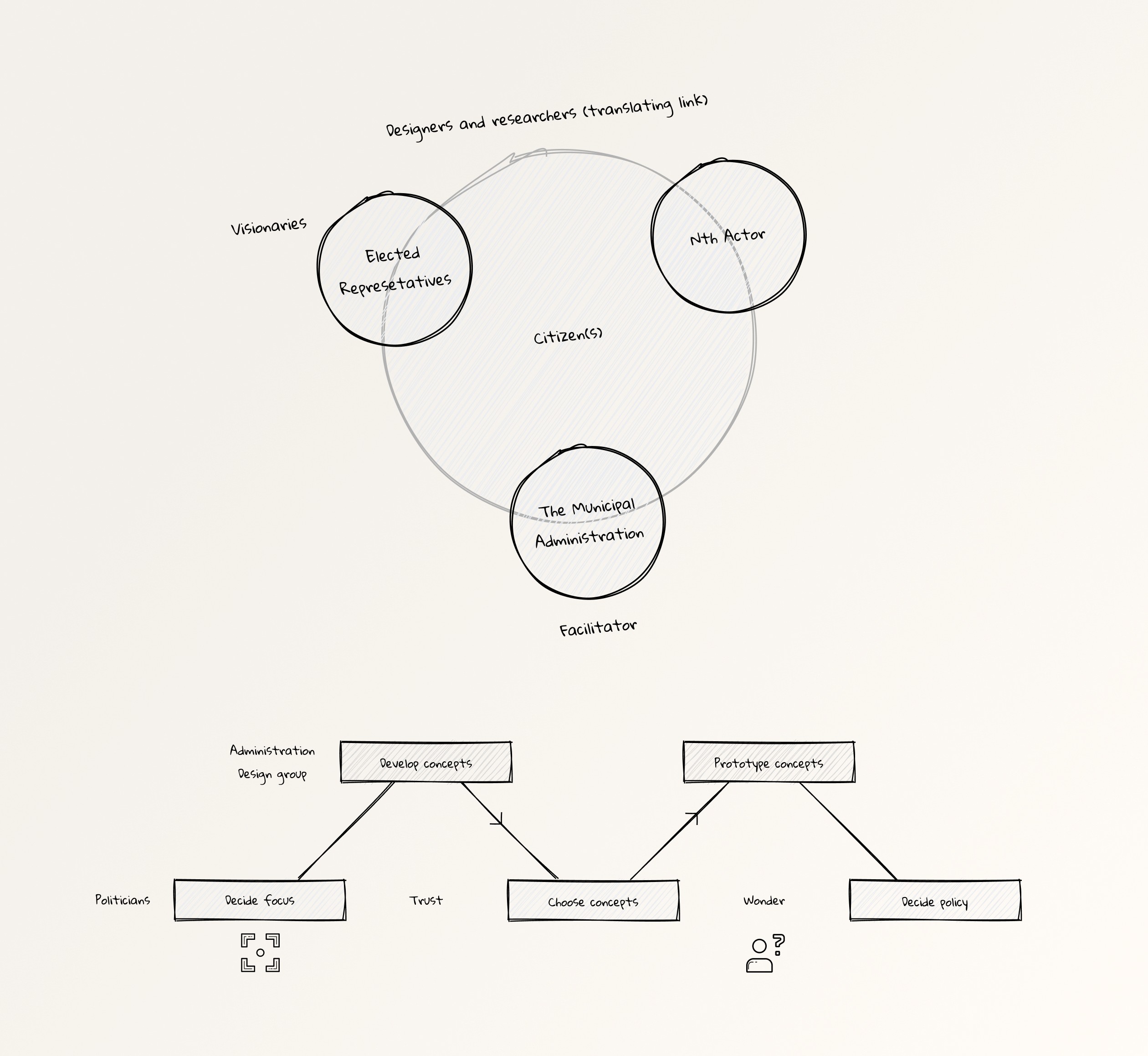
Working as a design team, we developed a four-step process that reimagined the policy creation workflow:
Futuring: creating knowledge-based future scenarios
Working with university researchers, the municipal administration creates knowledge-based images of liekly possible futures for a selected policy domain (e.g., "education in 2028"). These images provide future oriented context for decision-making. We facilitated this step through structured workshops using carefully crafted prompts and visualization techniques, helping participants move beyond present-day assumptions.
Articulating future goals: from scenarios to value-based statements
Politicians analyze the future images and articulate goal statements based on their values and citizens' needs. These statements focus on which human goals to address rather than prescribing specific solutions. We designed this step to enable collaborative goal-setting across party lines, using a taxonomy of human needs as a framework.
Prototyping: testing solutions in real contexts
The administration designs and tests interventions to explore different approaches to achieving the goals. Prototypes are situated in context, allowing citizens to experience and provide feedback on potential policies. We developed guidelines for converting abstract goals into testable prototypes, with metrics for evaluating their effectiveness.
Debating & deciding: evidence-based policy creation
Armed with insights from prototypes, politicians debate and develop appropriate policies. This evidence-based approach ensures decisions are grounded in real-world testing rather than assumptions.
Testing with city council representatives
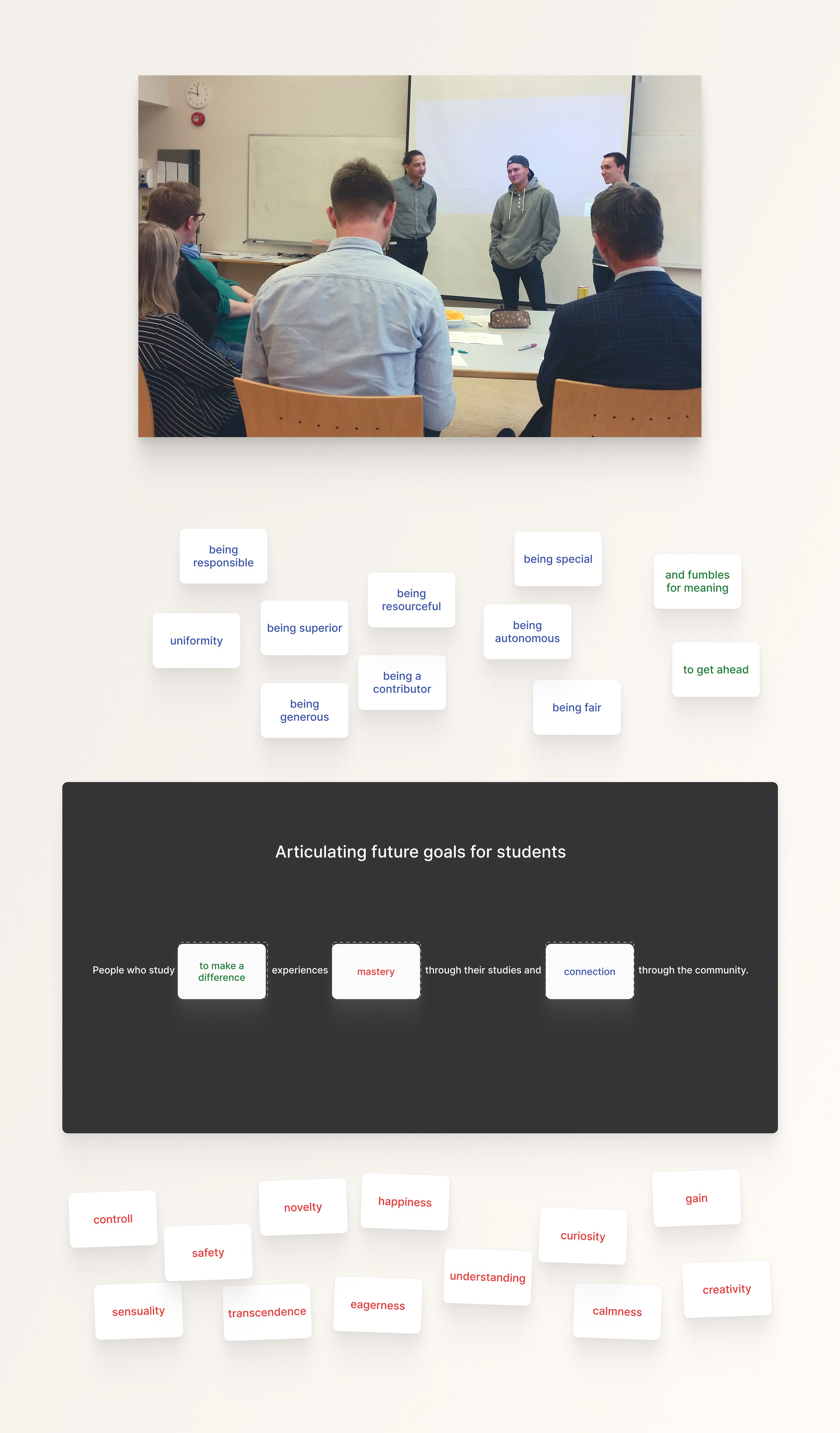
We tested the "Articulating Future Goals" step with five city council politicians from different parties by:
Creating three future scenarios depicting different citizen contexts in “2030”
Used actors to bring these scenarios to life, creating an immersive experience
Facilitated politicians in developing goal statements that addressed human needs
Observed how this approach shifted discussion from tactical solutions to strategic objectives
The workshop demonstrated that politicians could more effectively collaborate across party lines when focused on addressing human needs rather than specific implementation details.
Making policy development more meaningful for citizens
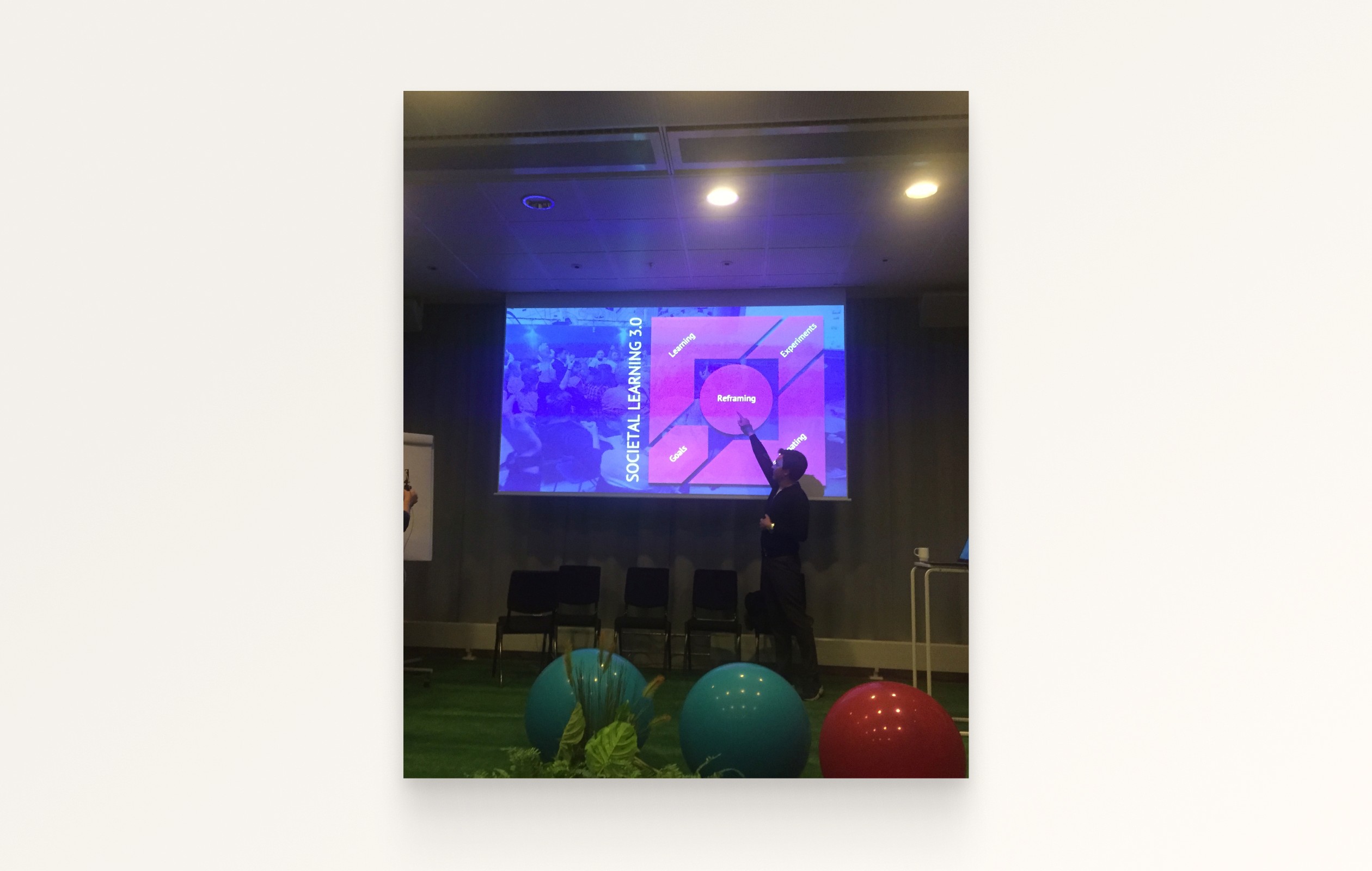
The Policy Design Model delivered several key benefits:
Enhanced citizen representation by focusing on future needs alongside present concerns
Improved decision quality through structured prototyping and evidence-based evaluation
Strategic alignment between political values and administrative implementation
Reduced polarization by focusing discussion on human needs rather than tactical solutions
Greater transparency through explicit articulation of values and goals
A senior politician who participated in testing commented: "I studied political science, which deals with perfect decisions. You deal with how people really work."
Our role and collaborative approach

As a design team on this project, we:
Conceived and developed the four-step policy design model
Created workshop methodologies and facilitation materials
Facilitated testing sessions with politicians and administrators
Designed visual communication tools to explain complex concepts
Synthesized insights from diverse stakeholders into a cohesive framework
Collaborated with municipal leadership
Key learnings from designing for local government
Design methods can transform policy-making when properly adapted to the political context
Future scenarios become more powerful when personified through storytelling and role-play
Values-based discussions foster innovation more effectively than solution-focused debates
Building on existing organizational strengths increases adoption of new processes
Providing structure for strategic thinking helps decision-makers focus on what matters most
Questions we didn't think to ask
Looking back, there were important questions we did not fully consider at the time. In 2018, as students studying policymaking in Trondheim, we operated within an environment where everyone we interviewed, both administrative workers and politicians, shared strong democratic values. The "Debating and Deciding" step in our model is deeply rooted in democratic practice, and we accepted this structure as a given, as a foundation stone (“grunnstein”) of how policymaking ought to work.
We focused on addressing the risk of policies becoming outdated by the time of implementation, introducing futuring and prototyping to strengthen resilience. However, we did not question what would happen if participants did not share a democratic mindset, or if policymakers approached decisions with absolute certainty, resistant to debate and complexity.
Our approach emphasized openness, curiosity, and a willingness to be challenged. Qualities that all of our participants exhibited. We did not explore how our model might function in environments where these qualities are absent. Democracy requires a psychological maturity: the ability to navigate opposition, to engage with disagreement without withdrawing or hardening into fixed positions. It requires tolerance, resilience, and a willingness to live with competing values and desires.
I question how the Policy Design Model would fit in less open, less consensus-driven political contexts. Could it adapt? Identifying the pain points of policymaking in environments with less emphasis on collaboration, and where dialogue is more difficult, seems a challenging, but important direction to explore. These are questions I now find myself returning to.
This project was completed as part of our Master's thesis in Industrial Design Engineering at the Norwegian University of Science and Technology (NTNU).